


The Complete Timber Framer
The Complete Timber Framer
A Complete Guide To Traditional Post-And-Beam Work
The practical, illustrated guide to building your own durable, economical timber-frame structures - by hand.
Couldn't load pickup availability
- Master payment method
- American express payment method
- Apple pay payment method
- Google pay payment method
- Shopify pay payment method
- Discover payment method
- Visa payment method
See It In Action
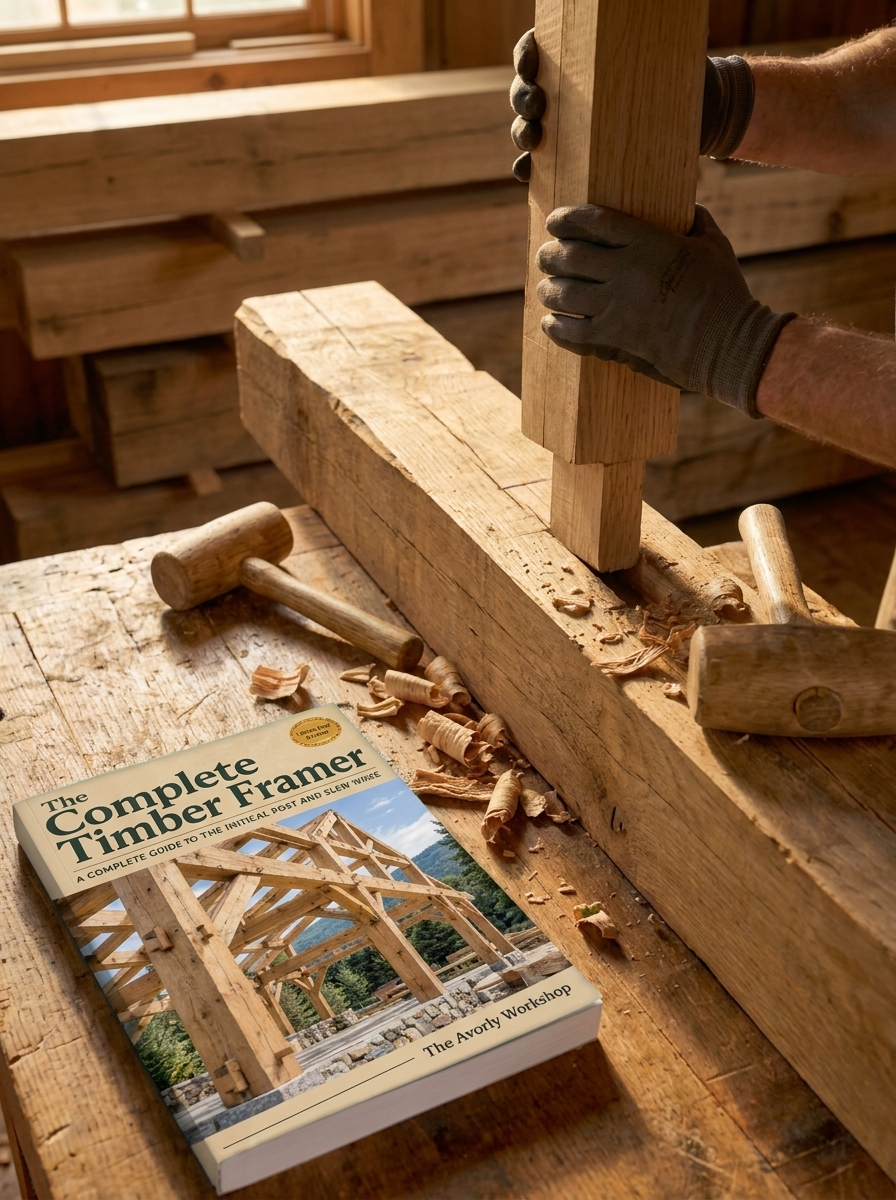
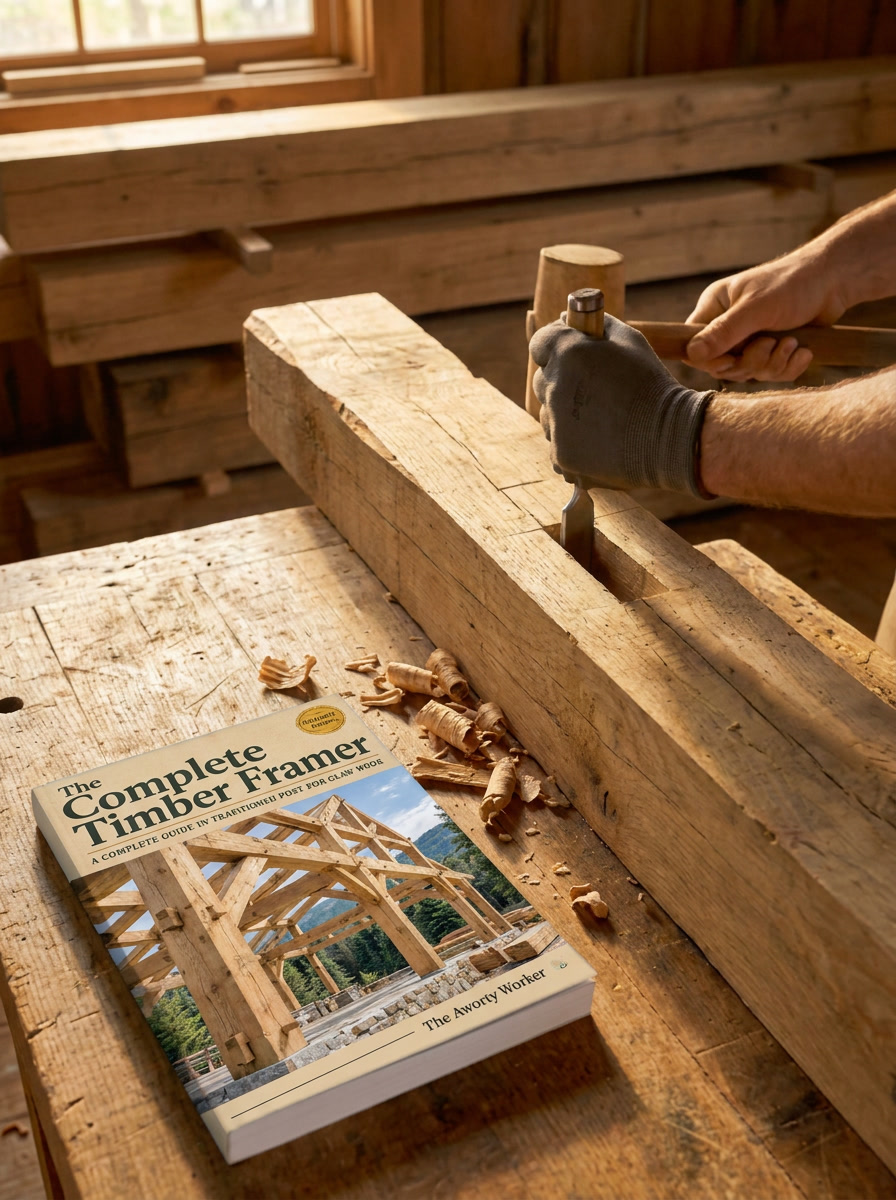
A Look Inside The Book
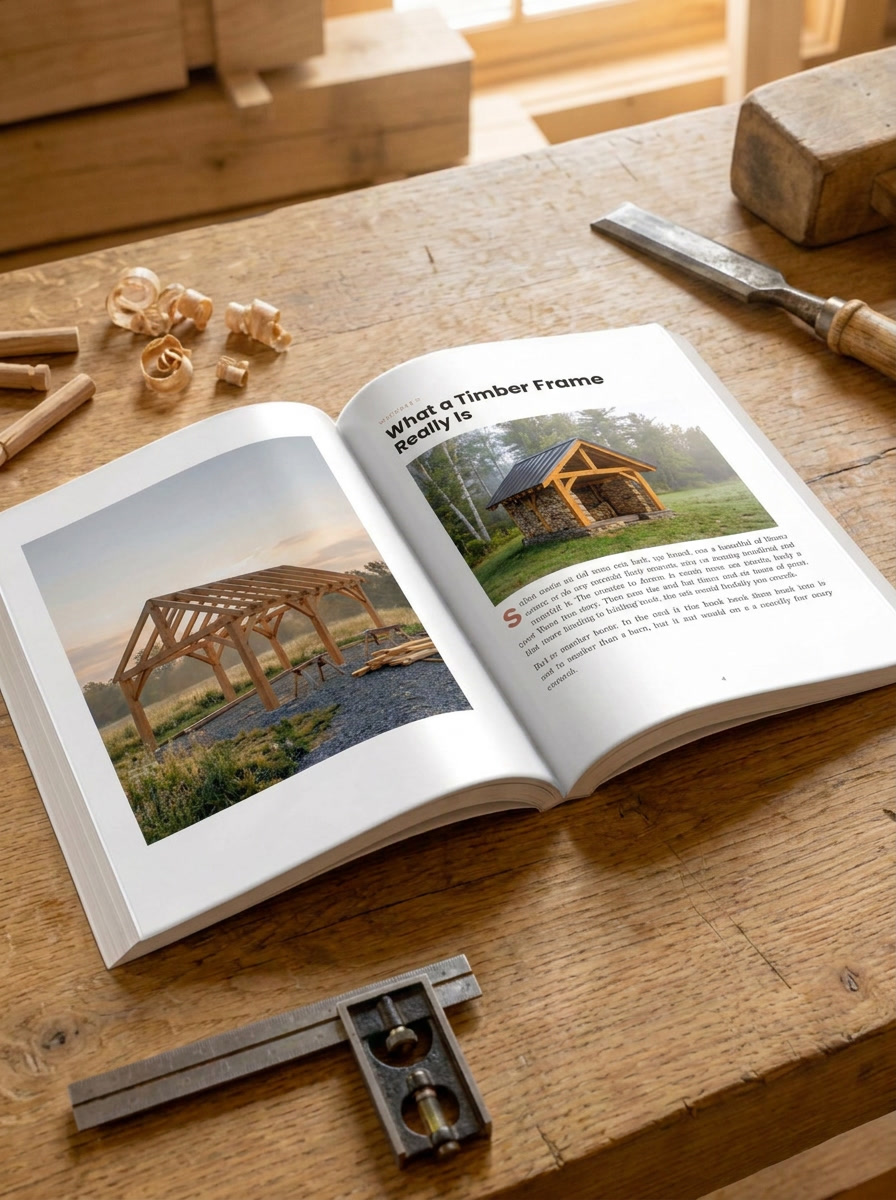
Real spreads from the 208 pages - clear, hand-drawn illustrations that make every step easy to follow. Tap any image to enlarge.

A Glimpse Of What You'll Learn
Clear lessons on timber selection, joinery, assembly, raising, and closing in - from the forest to the finished frame.
Selecting & Preparing timber
Selecting & Preparing timber
How to choose the right species and sizes, read grain, spot defects, and work with green (unseasoned) timber - plus hand-hewing and chainsaw milling if you're starting from the log.
Traditional joinery
Traditional joinery
Mortise-and-tenon, lap joints, dovetails, scarf joints and more - where each one belongs, how it carries load, and how to cut it accurately.
Designing for Strength & Beauty
Designing for Strength & Beauty
Understand the loads and stresses on a frame - compression, tension, bending and shear - so you can size timbers and place joints with confidence.
Tools: Old & New
Tools: Old & New
Combine modern power tools with time-tested hand tools - broadaxe, slick, framing chisel, boring machine - and learn how to keep them sharp and true.
Assembly & Raising
Assembly & Raising
Build in bents, draw-bore your pegs, and raise the frame safely - by hand or with a gin pole - the way it's been done for centuries.
Your starter project: the 12 × 16 toolshed
Your starter project: the 12 × 16 toolshed
Complete, dimensioned plans and a full materials list for a garden toolshed - the ideal first build to learn every core skill before tackling a house or barn.

The Author
Practical guidance from master timber framer & craft writer Jack D. Sabo.
Jack D. Sabo is an architect, builder, writer, and retired English teacher who has devoted his life to the art and instruction of traditional timber framing. A graduate of the Rhode Island School of Design, he is a founding director of the Timber Framers Guild of North America as well as the founding editor of Woodcarving Illustrated. This unique combination of formal design training, practical trade experience, and educational expertise defines his comprehensive approach to the craft.
As a builder, Sabo has framed and erected over 50 structures using exclusively traditional hand tools, often beginning the process directly in the forest. As a prolific author, he has written and co-authored dozens of woodworking titles - including Build a Classic Timber-Framed House and Hand Hewn - translating complex timber trades into clear, highly approachable instruction for everyday builders.
Sabo brings a hands-on, no-mystery philosophy to every project and publication. He demystifies the traditional building process, guiding woodworkers step-by-step through selecting timber, cutting precise joinery, and raising handcrafted frames designed to stand for centuries.
Most building books skim the hard parts. This one walks you through every joint, step by step.

|
Others | |
|---|---|---|
| Complete step-by-step build project | ||
| Traditional joinery explained clearly | ||
| Design-for-strength engineering made simple | ||
| Hand-tool methods & timber sourcing |
Money-Back Guarantee
Not satisfied? Return it within 30 days for a full refund—no questions asked. Try it completely risk-free!
Secure your copy now- 100% Satisfaction
- Fast Shipping
- Easy Returns
Trustpilot reviews
Excellent 4.8 / 5
by 14,000+ Builders & Homesteaders
-
First class book
This is a great book by Jack D. Sabo. Drawings/sketches are well done too and very illuminating.
Tremendous insights and craft learnt through real experience. Amazing book, just what I needed.
-
The Bible
I've reviewed this tome once before, but it's so good. I'm happy to do it again. This book is all you'll ever need for timber framing. There are others, costilier, but unless you're moving to Paris to rebuild notre dame, you'll never need them.
-
Strong book of information
This book is awesome! I have had it a couple weeks now and I can’t stop reading it. I am looking into building a timber frame project and this book covers all the ins and outs of timber framing. Great book for anyone interested in diy projects or an interest in historical construction.
-
Worth Every Penny ! ! !
This is NOT a Coffee Table Book. It contains Valuable information of the History of Timber Framing and includes many pictures of Historical Construction, Building Designs, and the Important Types of Joinery used ages ago that apply to Modern Timber framing!!!
-
Excellent resource
Awesome book about old school craft. I look forward to building a house and barn using these methods.
-
This Book Didn’t Just Teach Me Timber Framing : It Rebuilt My Soul
Let me start by saying: I bought this book thinking I’d casually learn how to build a quaint little garden shed. What I didn’t expect was to be spiritually awakened by mortise and tenon joints.
It’s not just a manual. It’s a lifestyle. A philosophy. A wooden revolution.
10/10. Would buy again if I hadn’t already memorized every glorious page.
-
HE WAS STOKED
I got this book for my hubby as a birthday gift and he loves it. He reads it just about every night before going to bed. Just like someone would read a novel. He is getting into timber framing so this book has really helped him understand the process more.
-
Best purchase
I've had this book since the nineties when I built my oak framed barn. I bought it for Christmas for my son in law who is building a timber framed house behind us. Need I say More?
-
A Must-Have for Timber Frame Construction Enthusiasts
Absolutely AMAZING book about timber frame construction. It's actually the second time I've purchased this, we misplaced the first one and needed another to help with the planning of a new building. If you are interested in timber frame construction, you'll want to own a copy of this book.
-
Worth Every Cent
This is an excellent book especially if you are new to Timber framing, you’ll find as handy as any of the tools in your tool box. Definitely recommend.
-
Best gift idea
Bought this as a gift for hubby. He was so stoked and said was the best surprise ever.
-
Great fundamentals
Good book. Very informative and well illustrated. Learned the basics of timber framing.
-
Excellent gift
I don’t remember how I came across this book many years ago. It’s an excellent book, I just bought one for a friend who wants to learn about residential wood frame structures.
-
I was hooked
This was a great read. The book gives great historical background as well as modern reasoning behind building timber frame structures. My family built a balloon frame home a couple of years ago and I am now looking forward to giving timber framing a shot. The shed outlined in this text seems very doable with the techniques then applicable to larger structures. I would definitely, and have, recommend this book to a friend.

Frequently Asked Questions
Find answers to common questions about our products.
Yes. It's written for both first-time builders and experienced carpenters. The authors deliberately keep it simple and start you on a small, achievable garden-toolshed project so you learn every core skill before tackling anything larger.
No. The book shows how to combine modern power tools with traditional hand tools, and it explains which tools matter, how to use them and how to keep them sharp. Many projects can be built with a modest kit.
Yes - it includes complete, dimensioned plans and a full materials list for a 12 × 16 ft garden toolshed, plus example projects like garages, a storage barn and a house addition.
It often can be. Using green (unseasoned) and locally sourced timber, the authors show how post-and-beam building can cost less than conventional "stick building" while producing a stronger, longer-lasting frame.
Yes. Beyond the starter shed, it covers frame types, designing for strength, joinery selection and raising — the foundation you need to plan larger structures, ideally with a professional review for anything sizeable.